
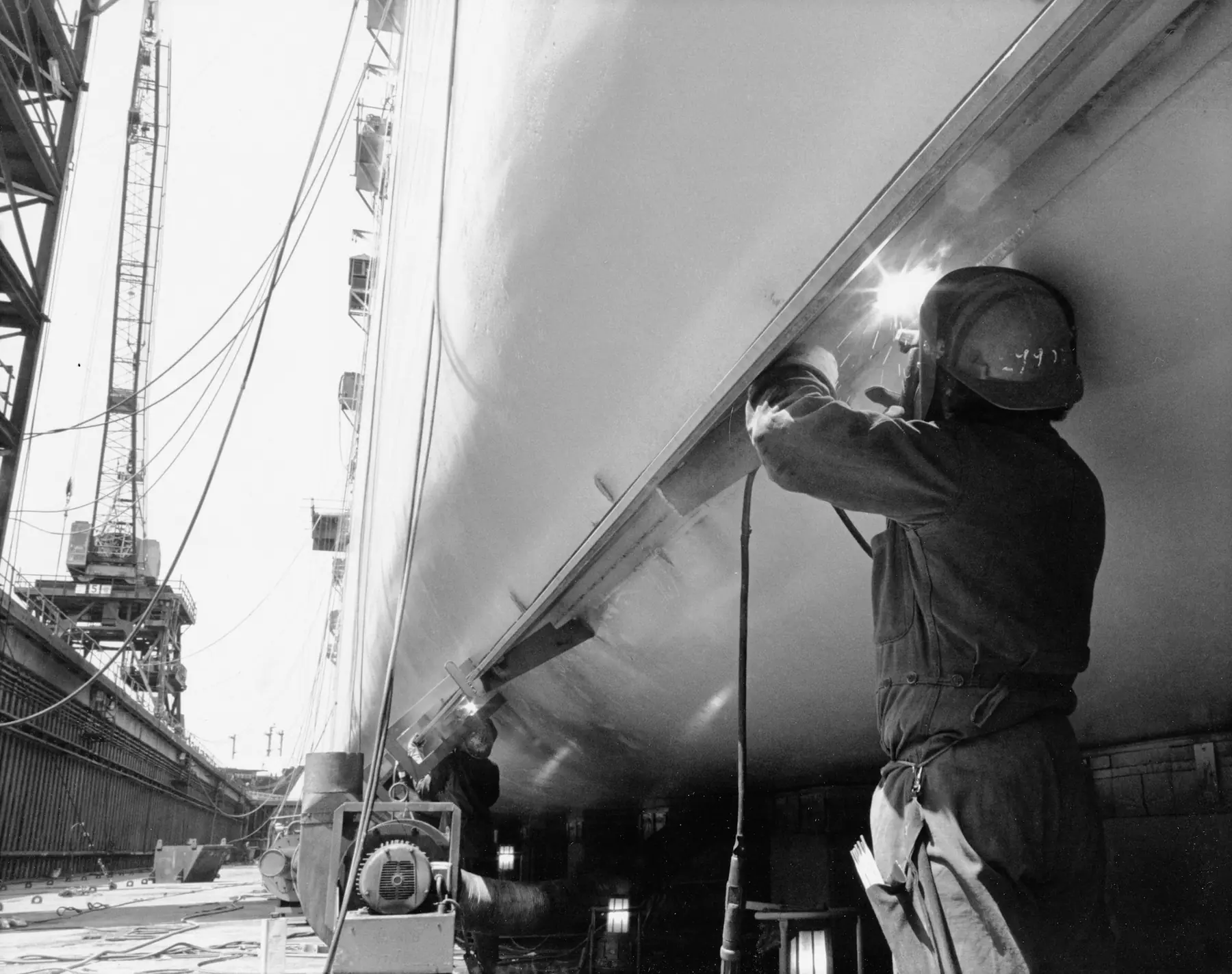
X3 Shipyard,Field by Field.
Space status, hot work, competent persons and fire watch for 29 CFR Part 1915.
- 46 CFR 136-144Subchapter M towing vessels
- 46 CFR 199.180Monthly drills
- 46 CFR 10.301Medical certificates
- 46 CFR 16.230Random testing — 50%
- 29 CFR 1915.12Confined & enclosed spaces
- 29 CFR 1917.50Crane certification
- 33 CFR 105.220Security drills every 3 months
- 33 CFR 155.1060Spill response exercises
- 46 CFR 4.05-10CG-2692 within 5 days
- 46 CFR 4.06-32-hour / 32-hour test clocks
Every record X3 Shipyard keeps, the rule behind it, how often it comes due, and exactly what to type in each field — with where to find it on your own paperwork.
Space Status
29 CFR 1915.12 / 1915.14 / 1915.15 · Before each entry and each shift, and after any change
The tested and posted status of each confined or enclosed space. Workers may not enter, or start hot work, until the space is tested and labeled safe.
| Field | What it is | Where to find it | Example |
|---|---|---|---|
| Space | The tank, void or compartment tested. | Use the name on the ship's drawings or tank plan. | No. 3 port wing tank |
| Posted status | The status posted at the entrance. | From the competent person's or marine chemist's test record. | Safe for Workers |
| Oxygen % | Oxygen reading in percent. Safe range is 19.5% to 22%. | The gas meter reading, written in the competent person's log. | 20.9 |
| Flammables % LEL | Flammable gas reading as % of the lower explosive limit. 10% or more = Not Safe for Workers. | The gas meter reading, written in the competent person's log. | 0 |
| Toxics / notes | Toxic gas readings and anything else worth noting. | The gas meter reading (H2S, CO, etc.) from the competent person's log. | CO 2 ppm, H2S 0 ppm |
| Toxic and corrosive readings | How the toxic readings compare with the exposure limit (PEL) and the danger level (IDLH). | Compare meter readings with the PEL for each gas. Above IDLH = no entry without SCBA. | Below the PEL |
| Tested / certified by | Who is qualified to test this space. | Hot work in fuel or cargo tanks (and spaces next to them) needs a marine chemist. Most others: a competent person. | Shipyard competent person |
| Fuel tank, cargo tank or other 1915.14(a) space | Yes for fuel or cargo tanks and other spaces that held flammables, plus spaces next to them. | Tank plan and cargo history. Yes means a marine chemist certificate is needed for hot work. | No |
| Tested at | When the test was done. | Competent person's log or the posted test record. | 06/30/2027 06:45 |
| Retest every (hours — as often as needed; retest after any change) | How many hours between retests. Also retest after any change in conditions. | Competent person's or marine chemist's instructions. Many yards retest each shift. | 8 |
Hot Work Permits
29 CFR 1915.503 / 1915.504 / 1915.14 · Each hot work job
Permits for welding, cutting and burning. A permit, a tested space and a trained fire watch are required before hot work starts.
| Field | What it is | Where to find it | Example |
|---|---|---|---|
| Location | Where the hot work is being done. | The permit. Be exact: vessel, frame, deck and space. | Main deck, frame 42 port |
| Authorized on the basis of | What authorized the hot work. | Fuel or cargo spaces need a marine chemist certificate. Others: competent person test or designated area. | Competent person test (1915.14(b)) |
| Certificate (marine chemist / competent person) no. | The number of the marine chemist certificate or competent person test record. | Top of the marine chemist certificate, or your competent person log entry. | MC-2027-0388 |
| Issued | When the permit was issued. | The hot work permit. | 06/30/2027 07:00 |
| Expires | When the permit runs out. | End time on the permit or the certificate it relies on. | 06/30/2027 15:30 |
| Hot work finished | When the hot work finished. | Welder or foreman's note on the permit. | 06/30/2027 14:50 |
| Fire watch released (30+ minutes after) | When the fire watch was released. It must stay at least 30 minutes after hot work ends. | Fire watch's note on the permit. | 06/30/2027 15:25 |
| Gas hoses disconnected at end of shift | Whether torch gas hoses were disconnected and removed at the end of the shift. | Foreman's end-of-shift check. | Yes |
| Status | Active while work is going on; Closed after the fire watch is released. | The permit. | Closed |
Competent Persons
29 CFR 1915.7(b) · Once per person, update when retrained
Your roster of Shipyard Competent Persons, who test and certify spaces. OSHA requires the roster with each person's name, employer and training date.
| Field | What it is | Where to find it | Example |
|---|---|---|---|
| Employer | The company the competent person works for. | Their employment record or contractor paperwork. | Bayou Shipyard LLC |
| Designated | The date the person was named a competent person. | Your written designation or letter. | 01/15/2026 |
| Last trained | The date of their most recent competent person training. | Course certificate or your training record. | 01/10/2026 |
| Your next review or retraining (company policy) | When you plan to review or retrain this person (your company policy). | Your training program. Many yards refresh yearly. | 01/10/2027 |
Fire Watch Training
29 CFR 1915.508(e) · Every 12 months
Training records for workers who stand fire watch. Fire watches must be trained before their first assignment and at least yearly.
| Field | What it is | Where to find it | Example |
|---|---|---|---|
| Last trained | The date of the last fire watch training. | Training sign-in sheet or certificate. | 06/30/2027 |
| Trainer | Who gave the training. | Sign-in sheet or certificate. | Safety Dept. — L. Chen |
| Repeat every (days) | Days between trainings. 365 = yearly. | OSHA requires at least yearly. | 365 |
Rescue Team Drills
29 CFR 1915.12(e) · Every 12 months
Practice drills for your confined-space rescue team. Each team must practice a rescue at least once every 12 months.
| Field | What it is | Where to find it | Example |
|---|---|---|---|
| Team | The rescue team's name or crew. | Your rescue team roster. | Day shift rescue team |
| Team | Whether the team is your own employees or an outside rescue service. | If outside, you must make sure they can respond in time and are trained. | Our own team |
| Practice drill held | The date of the practice drill. | Drill record or sign-in sheet. | 06/30/2027 |
| Scenario | What the drill practiced. | Drill plan. Use a space like the ones you actually enter. | Unconscious worker in double bottom |
| At least one member with current first aid & CPR | Yes if at least one team member has current first aid and CPR. | First aid/CPR cards for team members. | Yes |
| This was an actual rescue (counts as the drill) | Yes if this was a real rescue, which can count as the yearly drill. | Incident report. | No |
| Repeat every (days) | Days between drills. 365 = yearly. | OSHA requires at least every 12 months. | 365 |
Exposure Monitoring
29 CFR 1915.1026 / 1910.1025 / 1910.1053 / 1910.95 · Per the results (often every 3 or 6 months above the action level)
Air and noise sampling for lead, silica, chrome and other hazards. Results above the action level trigger more sampling and medical checks.
| Field | What it is | Where to find it | Example |
|---|---|---|---|
| Agent | The hazard being measured. | Pick the substance or noise. | Lead |
| Area / task | The area or job sampled. | The sampling report. Be specific about task and location. | Grit blasting, dry dock 2 |
| Sampled | The date the sample was taken. | Lab report or industrial hygienist's report. | 06/30/2027 |
| Result (same units as the limits) | The 8-hour average result, in the same units as the limits below. | Lab report. Lead and silica are usually in µg/m³; noise in dBA. | 42 |
| Action level | The action level for this hazard. Lead 30 µg/m³, silica 25, hex chrome 2.5, noise 85 dBA. | OSHA standard for the substance, or your hygienist's report. | 30 |
| Permissible exposure limit | The permissible exposure limit. Lead 50 µg/m³, silica 50, hex chrome 5, noise 90 dBA. | OSHA standard for the substance, or your hygienist's report. | 50 |
| Next sample (leave blank to work it out) | When the next sample is due. Leave blank and X3 works it out from the result. | Fill in only if your hygienist set a date. | 12/31/2027 |
OSHA Injury Log
29 CFR 1904 / 1904.39 · Each time it happens (enter on the 300 within 7 days)
Your OSHA 300 log of work-related injuries and illnesses. OSHA asks for the last 5 years of logs, and some cases must be phoned in within hours.
| Field | What it is | Where to find it | Example |
|---|---|---|---|
| Date & time | Date and time the injury happened or the illness began. | First report of injury, supervisor's incident report, or the OSHA 301 form. | 06/30/2027 09:15 |
| Where | Where it happened. | Incident report. Be specific: the dock, vessel name and space, or shop area. | Berth 4, near crane 2 |
| What happened | What happened, in one or two plain sentences. | Incident report or OSHA 301. Say what the person was doing and what hurt them. | Hand caught between sling and load |
| Body part | The part of the body that was hurt. | Incident report or the doctor's note. | Left hand, two fingers |
| Type | Injury, or the type of illness. This sets the column on the OSHA 300. | Doctor's diagnosis or the 301 form. Most cases are Injury. | Injury |
| Outcome | The most serious result of the case. This decides whether it goes on the 300. | Doctor's work-status note. Pick the worst outcome: death, then days away, then restriction. | Days away from work |
| Days away (up to 180) | Calendar days the person could not work, not counting the day of injury. Stop counting at 180. | Doctor's work notes and payroll or time records. | 12 |
| Days restricted (up to 180) | Calendar days on light duty or a different job. Stop counting at 180. | Doctor's restriction notes and supervisor's records. | 20 |
| Hospitalized | Whether the person was admitted to a hospital. An ER visit only is not an admission. | Hospital paperwork or the employee's family. Admission must be reported to OSHA within 24 hours. | In-patient admission |
| Amputation or loss of an eye | Yes for any amputation (including a fingertip) or loss of an eye. | Doctor's report. Must be reported to OSHA within 24 hours. | No |
| Privacy case (name withheld on the 300) | Yes to leave the name off the 300 log for sensitive cases. | Use for sexual assault, mental illness, HIV/hepatitis/TB, contaminated needlesticks, or an illness the worker asks to keep private. | No |
| Reported to OSHA | When you reported it to OSHA, if required: deaths within 8 hours; admission, amputation or eye loss within 24. | Call OSHA at 1-800-321-6742 or report online. Note the time of the call. | 06/30/2027 13:40 |
| Entered on the OSHA 300 | The date the case was written on the OSHA 300 log. | Your 300 log. You have 7 calendar days after learning of a recordable case. | 07/02/2027 |
Marine Chemist Certificates
29 CFR 1915.14(a) / NFPA 306 · Each certificate
Marine chemist certificates for spaces that held fuel or flammable cargo. These are required before hot work in those spaces.
| Field | What it is | Where to find it | Example |
|---|---|---|---|
| Space(s) | The spaces the certificate covers. | Listed on the marine chemist certificate. | No. 2 fuel tank and adjacent voids |
| Certificate no. | The certificate number. | Top of the marine chemist certificate. | MC-2027-0388 |
| Marine chemist | The NFPA-certified marine chemist's name. | Signature block of the certificate. | D. Arceneaux, CMC |
| Designation | The designation the chemist gave the space. | The designation written on the certificate. | Safe for Hot Work |
| Issued | When the certificate was issued. | Date and time on the certificate. | 06/30/2027 06:30 |
| Valid until | When the certificate stops being valid. | Shown on the certificate. Conditions can also end it early. | 07/01/2027 06:30 |
Lockout / Tags-Plus
29 CFR 1915.89 · Each time a system is locked or tagged out
Each lockout or tags-plus application on a system or machine. Shipyards follow their own lockout rule, which allows a tag plus an extra safety step.
| Field | What it is | Where to find it | Example |
|---|---|---|---|
| Location | Where the system is. | Vessel, deck and space, or shop area. | Engine room, lower level |
| System or machine | The machine or system being isolated. | Equipment name or ID tag. | No. 1 ship's service generator |
| Isolation points | Every point where energy was shut off and locked or tagged. | Your lockout procedure or isolation list. | Breaker 12 main switchboard; valve FV-3 |
| Tags-plus additional safety measure | The extra step used with a tag when a lock can't be used. | E.g. removed fuse, blank flange, blocked valve, disconnected line. | Removed control fuse |
| Applied | When the lockout or tags-plus was put on. | Lockout log or tag. | 06/30/2027 07:15 |
| Removed | When it was taken off. | Lockout log. | 06/30/2027 16:00 |
| Status | Applied while in place; Removed when taken off. | Lockout log. | Applied |
Respirator Fit Tests
29 CFR 1915.154 / 1910.134(f) · Every 12 months, and when the respirator model changes
Each worker's respirator fit test. A worker must pass a fit test before first using a tight-fitting respirator and every year after.
| Field | What it is | Where to find it | Example |
|---|---|---|---|
| Respirator (make, model, size) | The exact respirator the person was fit tested on. | The fit-test record or report from the tester. Include make, model and size. | 3M 7502, medium |
| Fit tested | The date the person passed the fit test. | Fit-test record or certificate from your fit tester or clinic. | 06/30/2027 |
| Repeat every (days) | Days between fit tests. The rule is at least once a year. | Use 365 unless your program is stricter. | 365 |
PPE Hazard Assessments
29 CFR 1915.152(b) · Once per trade, update when work or hazards change
The written hazard assessment for each trade, showing which PPE is needed. OSHA asks for this document at the opening meeting.
| Field | What it is | Where to find it | Example |
|---|---|---|---|
| Occupation / trade | The job or trade assessed. | Your job list. | Welder |
| Date of assessment | The date the assessment was done. | Signed hazard assessment certification. | 06/30/2027 |
| Assessed by | Who did and signed the assessment. | Signature on the certification. | L. Chen, Safety Manager |
| PPE selected | The PPE chosen for the hazards found. | The hazard assessment. | Welding hood, FR jacket, gloves, boots |
LOTO Audits & Incidents
29 CFR 1915.89(p), (q) · Every 12 months, and after any lockout incident
The yearly audit of your lockout/tags-plus program, and investigations when lockout fails.
| Field | What it is | Where to find it | Example |
|---|---|---|---|
| Record | Whether this is the yearly audit or an incident. | Pick Incident when a lockout or tags-plus failed or was bypassed. | Annual program audit |
| Audit or incident date | The date of the audit or incident. | Audit report or incident report. | 06/30/2027 |
| Written report done | The date the written report was finished. | The signed report. | 07/05/2027 |
| Corrections completed | The date all corrections were finished. | Corrective action records. | 07/31/2027 |
| Findings | What the audit or investigation found. | Report summary. | Two procedures missing verification step |
Entry Training
29 CFR 1915.12(d) · Before first entry, and when duties change
Training records for workers who enter confined or enclosed spaces. Each must be trained before first entry and when duties change.
| Field | What it is | Where to find it | Example |
|---|---|---|---|
| Trained & certified | The date the worker was trained and certified. | Training certificate or sign-in sheet. | 06/30/2027 |
| Certified by | Who trained and certified the worker. | Name on the training certificate. | L. Chen |
| Retrain when duties change (date) | When the worker needs retraining because duties are changing. | Your training plan. | 01/15/2028 |
Fire Safety Program
29 CFR 1915.502 / 1915.505 / 1915.508 · Per item: quarterly, 6-monthly or yearly
Your shipyard fire safety plan and fire response team: plan reviews, training, drills and medical exams.
| Field | What it is | Where to find it | Example |
|---|---|---|---|
| Item | Which fire program task was done. | Pick the matching item. Each has its own interval. | Fire response team — drill (6 months) |
| Done | The date the task was done. | Training records, drill report or medical exam record. | 06/30/2027 |
Toolbox Talks
29 CFR 1915 / 1917 training · Weekly (your schedule)
Short safety talks with the crew and who attended.
| Field | What it is | Where to find it | Example |
|---|---|---|---|
| Date | Date of the talk. | Your sign-in sheet. | 10/24/2026 |
Safety Walkdowns
29 CFR 1915.73 / 1915.74 / 1917.112 · Weekly (your schedule)
A walk of the yard against OSHA's most-cited shipyard rules. Fails become open items.
| Field | What it is | Where to find it | Example |
|---|---|---|---|
| Walked | Date of the walkdown. | Your checklist. | 10/24/2026 |
Chemicals & SDS
29 CFR 1915.1200 · When a new product arrives
Every hazardous chemical on site, its safety data sheet and whether workers were trained on it.
| Field | What it is | Where to find it | Example |
|---|---|---|---|
| SDS revision date | Revision date printed on the safety data sheet. | Section 16 or the header of the SDS. | 01/15/2026 |
| Workers trained on it | When workers were trained on this chemical. | Hazard communication training records. | 02/01/2026 |
Compliance information, not legal advice. Rules cited are current as we publish; confirm against the official eCFR.